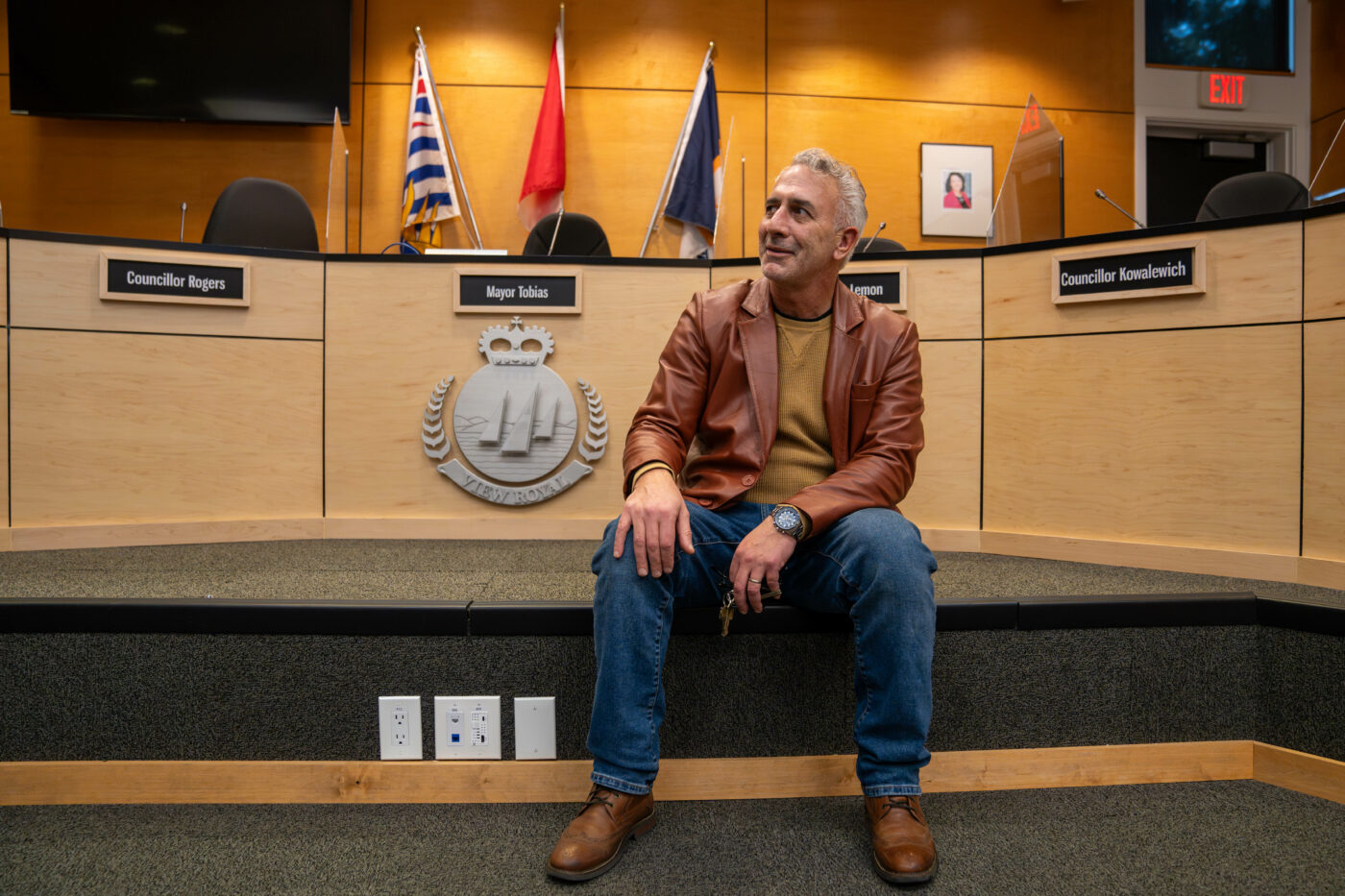
By Andrew Weaver and Sid Tobias
Most British Columbians are not looking for a political fight. They want stability, responsible government, affordable homes, accessible health care and confidence that their children will inherit a better province.
They also want to be heard.
Consider what happened in the B.C. Legislature on November 29, 2023. During consideration of Bill 44, significant changes affecting the Vancouver Charter were approved at a reported average of just 17 seconds per clause. Nineteen clauses were adopted in less than two minutes, without substantive debate or amendments during that sequence.
These changes formed part of sweeping provincial housing legislation introduced without meaningful prior consultation with the municipalities and communities directly affected, the Union of British Columbia Municipalities (UBCM), or the broader public.
Housing affordability is an urgent problem. But urgency should not become an excuse to bypass public engagement or legislative scrutiny. Municipalities are responsible for much of the infrastructure, servicing and local planning needed to support housing. Their perspectives are not obstacles to progress. They are essential to making good policy.
When Did Compromise Become a Weakness?
Increasingly, political parties and their supporters appear to view winning a majority government as the only meaningful electoral victory. A majority becomes an opportunity to advance legislation without accommodating competing perspectives.
Yet winning a majority of seats does not mean winning the support of every British Columbian. Nor does it mean every policy reflects the interests of the population as a whole.
The purpose of parliamentary democracy is not simply to count votes. It is to test ideas, challenge assumptions, examine evidence and improve legislation through debate.
We have both experienced the value of this approach firsthand, although in very different environments.
In 2017, Andrew led the BC Green Party into a confidence-and-supply agreement with John Horgan’s NDP, enabling the formation of a minority government. That arrangement required negotiation, cooperation and a willingness to accommodate different perspectives. It did not eliminate disagreement, including on significant issues such as resource development. But it demonstrated that political differences need not prevent stable government.
During Sid’s military career, he served as chair of a multinational NATO working group. Bringing representatives of different nations together meant navigating competing national interests, operational requirements and technical perspectives. Progress depended on listening, examining evidence, building consensus and finding solutions that participating nations could support.
Our experiences reinforced a common lesson: compromise is not a weakness. It is often the foundation of durable decisions.
Legislation developed through meaningful consultation and debate has a better opportunity to withstand changes in government because more perspectives have been considered, unintended consequences examined and broader support established.
The authority to make a decision should never be confused with the wisdom of making it without listening.
The Cost of No Longer Listening
A recent Times Colonist article, “Campaign damaging posts rooted in growing polarization: UBC prof,” raises concerns about the increasingly confrontational nature of our political discourse.
We do not believe Canada has fully healed socially from the COVID-19 pandemic. Divisions that existed long before COVID became more pronounced during periods of isolation, uncertainty and fear. We continue to underestimate the psychological and social consequences for individuals, families and communities.
The Freedom Convoy protests of 2022 offer a troubling example of what can happen when trust breaks down and people no longer believe their concerns are being heard.
Canadians held deeply different views about public health restrictions, individual freedoms and the responsibilities of government. Some concerns were legitimate, while misinformation, extremism and unlawful blockades also became part of the protests. The consequences extended well beyond those who participated, affecting residents, businesses, families and confidence in public institutions.
The federal Public Order Emergency Commission subsequently examined the deeper grievances, declining trust in government and increasingly hostile political discourse surrounding the protests.
The pandemic did not create these divisions, but it provided the circumstances in which they became more visible.
We should have learned something from that experience.
Listening does not mean agreeing. Understanding someone’s concerns does not require accepting their conclusions. And compromise does not mean abandoning principles or tolerating conduct that infringes on the rights of others.
It means recognizing that dismissing people, questioning their motives or reducing complex disagreements to opposing political identities can deepen the very divisions governments should be working to resolve.
Governments cannot afford to underestimate the second- and third-order effects of the trauma COVID caused to individuals, their friends and families, and their communities. Those effects continue to influence how Canadians view authority, institutions and one another.
Canada is a country built on the accommodation of differences. Our parliamentary traditions, federal structure, linguistic and regional diversity, and ongoing work toward reconciliation all require us to find ways of living and governing together despite fundamentally different perspectives.
Listening to understand, debating respectfully and compromising in good faith are not simply desirable political behaviours.
They are existentially Canadian.
Why Call an Election Now?
This makes Premier David Eby’s decision to call an early provincial election particularly worthy of examination.
The Premier called an election two years ahead of schedule despite holding a majority government, citing the threats posed by Donald Trump and the need for a renewed mandate.
Those threats deserve serious attention. But why respond to external uncertainty by introducing additional political uncertainty at home?
The Premier already possessed the legislative authority to govern and the opportunity to work with opposition parties, municipalities, First Nations, businesses and communities.
Instead, British Columbians have been drawn into another election, overlapping with municipal elections and framed substantially around the risks associated with political opponents.
There is a difference between warning citizens about genuine threats and using those threats to deepen domestic political divisions.
The responsibility of a Premier extends beyond winning elections. It includes governing for those who did not vote for the governing party and finding common ground in a divided province.
That responsibility becomes more important, not less, during periods of uncertainty.
Leadership That Looks Beyond the Next Election
We believe British Columbia needs an approach grounded in evidence, meaningful engagement, respect for differing perspectives and a willingness to acknowledge when government gets something wrong.
Public consultation should not be a procedural exercise undertaken after decisions have effectively been made. Debate should not be dismissed as obstruction. And criticism should not automatically be treated as political hostility.
Neither the political left nor the political right has a monopoly on good ideas. We can disagree about housing, taxation, resource development, climate policy and the role of government without treating those who disagree with us as enemies.
Our experiences in minority government and multinational negotiations have taught us that the most durable decisions are often those shaped by competing perspectives, rather than insulated from them.
We should judge public policy by whether it improves affordability, strengthens health care, supports a sustainable economy, protects our environment and creates opportunities for the next generation.
Not by whether it produces a favourable headline or disadvantages a political opponent.
The political, economic and social debts we accumulate today will eventually be inherited by our children. We should be particularly careful about passing on a province that is not only more indebted financially, but more divided socially.
Two Responses to Polarization
Regardless of your politics, consider the contrast unfolding in Canada this week.
In British Columbia, we have a Premier who has called an early election amid concerns about external threats and political division.
At the same time, Prime Minister Mark Carney has spent much of the week in Alberta, where the question of separation from Canada is being actively debated, engaging with a province in which many people feel alienated from the federal government.
Two leaders confronting political division. Two different approaches to responding to it.
One has chosen to seek a renewed electoral mandate. The other has chosen direct engagement with those questioning their place in the country.
The lesson is not about political affiliation. It is about leadership.
Winning elections is the responsibility of political parties.
Bringing people together is the responsibility of those entrusted to govern.
Listening to understand, debating respectfully and finding compromise are not signs of weakness. They are fundamental to who we are as Canadians.
Our children deserve leaders who understand the difference.